The Necessity of Spiritual Nourishment
By Joshua L Mullins
“If thou put the brethren in remembrance of these things, thou shalt be a good minister of Jesus Christ, nourished up in the words of faith and of good doctrine, whereunto thou hast attained.”
— 1 Timothy 4:6 (KJV)
Have you ever considered how many meals you’ve eaten since the day you were born? It would be nearly impossible to remember them all. In fact, you probably couldn’t tell me what you ate for dinner three weeks ago. Nevertheless, every nutritious meal you’ve eaten over the course of your life has contributed in some measure to your physical growth, development, and strength.
Although you may have forgotten the meals, your body benefited from the nourishment it received.
This is an excellent illustration of what occurs when we consistently feed upon the Word of God.
When Paul wrote to Timothy, he used a very interesting Greek word that appears nowhere else in the New Testament. The words “nourished up” are translated from the Greek word entrephō, a compound of the words en, meaning in, and trephō, meaning to feed, nourish, rear, or bring up.
In ancient Greek literature, this word was also used figuratively to describe the education and development of an individual. Even the Greek philosopher Plato employed this word in connection with a person’s upbringing under established laws.
Thus, the word encompasses more than the act of eating. It carries the idea of development through sustained nourishment and instruction. Furthermore, the grammatical form Paul uses here presents this nourishment as an ongoing activity.
Now consider to whom Paul was writing.
According to 2 Timothy 3:15, Timothy had known the Holy Scriptures from childhood. He had spent years receiving biblical instruction, and by this point in his life, Paul had entrusted him with considerable ministerial responsibility.
Yet with all Timothy knew about the Scriptures, and with all the spiritual experience he had accumulated, Paul still emphasized his need for continual nourishment.
Apparently, there is no point in our spiritual development at which we outgrow our need to be fed!
Just because you have been a Christian for thirty years does not mean your spirit is adequately nourished today. You may have attended Bible school, memorized hundreds of scriptures, preached thousands of sermons, and experienced remarkable things with God. But none of those accomplishments eliminates your present need for spiritual nourishment.
Think of a man who has spent twenty years developing his physical strength. What would happen if he suddenly decided that because he had attained a certain level of strength, he no longer needed to eat regularly?
His years of development would not exempt him from his daily nutritional requirements.
The same principle applies to the inward man.
In Ephesians 3:16, Paul prayed that believers would be:
“That he would grant you, according to the riches of his glory, to be strengthened with might by his Spirit in the inner man.”
The word “strengthened” is translated from the Greek word krataioō, which means to strengthen or make strong. Paul was concerned with the development of strength within the believer.
This is one reason we must make a distinction between knowing the Word of God and continually feeding upon it. What you learned twenty years ago may have contributed significantly to your spiritual development, but the nourishment you received yesterday does not eliminate your need for nourishment today.
Jesus said in Matthew 4:4:
“Man shall not live by bread alone, but by every word that proceedeth out of the mouth of God.”
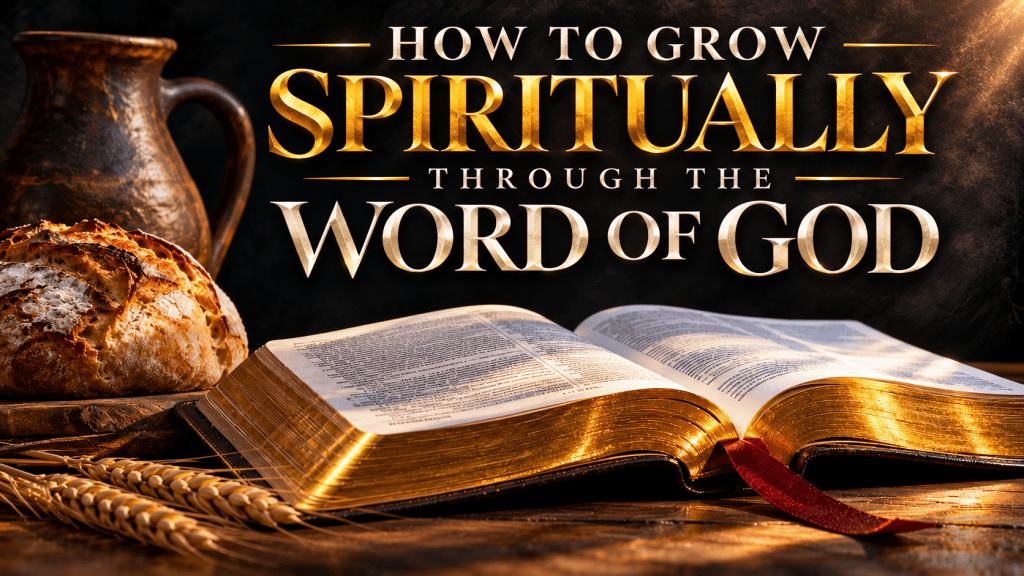
Notice that Jesus placed natural food and the Word of God alongside one another when discussing man’s need for sustenance.
Your physical body requires natural nourishment, and your inward man requires spiritual nourishment. Both must be attended to regularly.
Spiritual maturity does not eliminate your need for spiritual nourishment any more than physical maturity eliminates your need for natural food.
So regardless of how long you’ve known the Lord, continue feeding your spirit on His Word. Give yourself sufficient time to read it, meditate upon it, and become thoroughly acquainted with its truths.
You may not remember every scripture you read or every sermon you hear, just as you cannot remember every meal you’ve eaten. But as you consistently receive, believe, and practice the Word of God, you are contributing to the development and strength of your inward man.


Leave a Reply