By Joshua L Mullins
My 2022 Dream, the 2026 Election, and the Future of Our Constitution
In 2022, I had a dream that I have never forgotten.
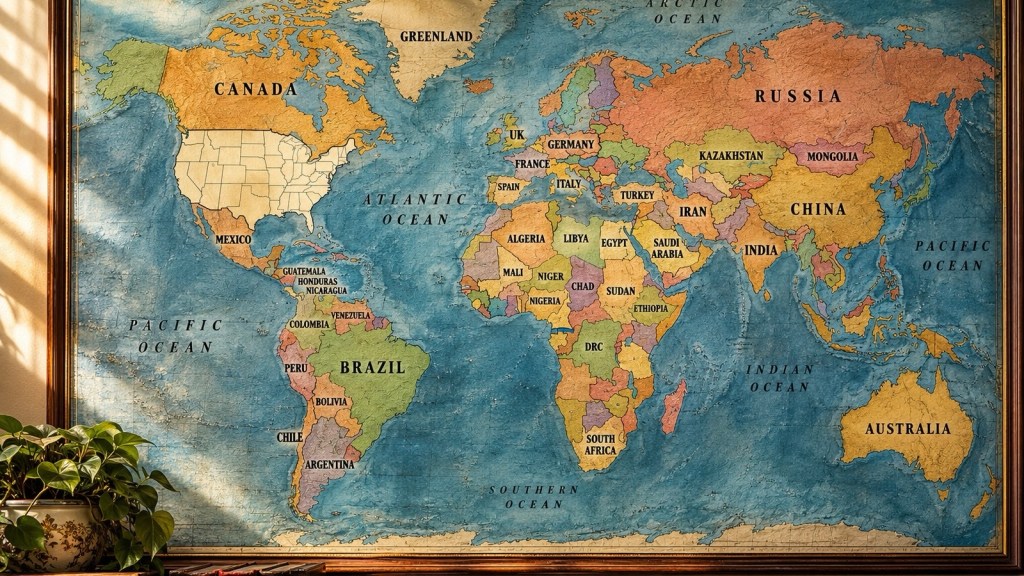
I was looking at a world map hanging on my wall. Every country had its name displayed. But when I looked at the United States, something was different.
America was still there. The borders hadn’t changed. Every state was outlined exactly where it belonged.
But the names were gone.
What I sensed was that America’s identity, founding principles, values, and morals were no longer recognizable from what they had originally been.
As a Christian, I believe God speaks through dreams and visions concerning present and future events.
Now, four years later, I’m looking at developments in American politics that raise serious questions about our country’s future.
And following the November 3, 2026, election, I believe there are some things Americans need to examine.
The Numbers Americans Should Know
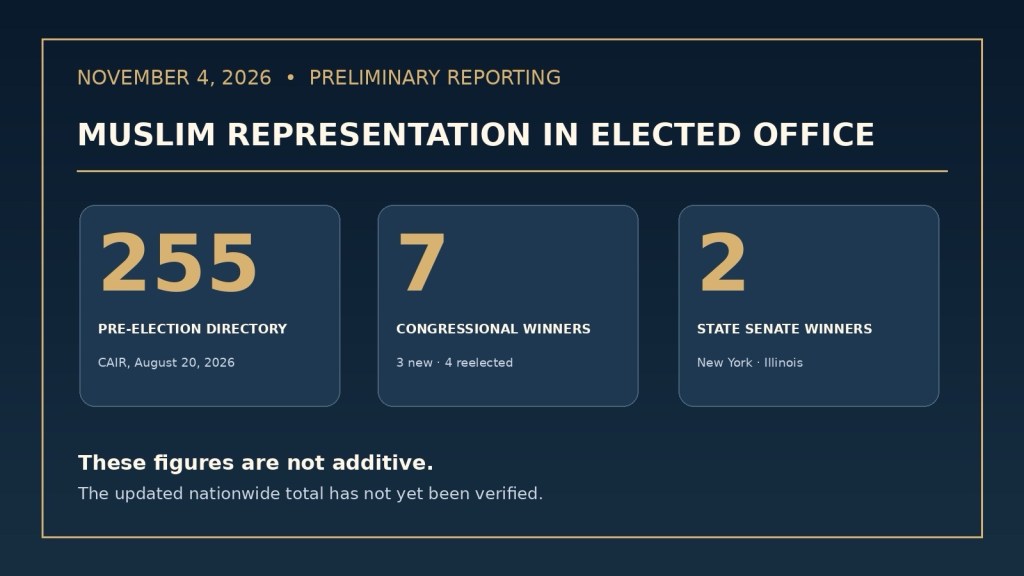
According to the Council on American-Islamic Relations (CAIR), its August 20, 2026, directory identified 255 Muslim elected officials and elected judges across 26 states.
These positions include Congress, state legislatures, mayoral offices, local councils, education boards, and elected judgeships.
Now consider what happened yesterday.
Following the November 3 election, at least seven Muslim candidates were reported as congressional winners.
Three were newly elected: Abdul El-Sayed of Michigan, Adam Hamawy of New Jersey, and Darializa Avila Chevalier of New York. El-Sayed is projected to become the first Muslim to serve in the United States Senate.
Four incumbent representatives—Ilhan Omar, Rashida Tlaib, André Carson, and Lateefah Simon—won reelection.
Two other Muslim candidates, Aber Kawas of New York and Nabeela Syed of Illinois, were also reported as winners in state Senate races.
That’s at least nine reported winners in federal and state legislative contests, although several were already serving in office.
The pre-election nationwide count was 255. A verified updated total is not yet available, and the results remain subject to certification.
But here’s what I want Americans to understand.
The number of Muslim officials holding political office isn’t the entire issue.
I’m also concerned about public statements from certain Islamic religious leaders concerning America’s future.
When Religious Leaders Speak About Ruling America, Shouldn’t We Listen?
On May 23, 2026, two Islamic scholars, Karim Abu Zaid and Uthman Ibn Farooq, spoke at the Authentic Ilm Mission conference in Arlington, Texas.
According to documentation published by the Middle East Media Research Institute (MEMRI), Abu Zaid declared that Islam would rule the world again.
At the same conference, Farooq spoke of his goal for America to become a Muslim country.
He also stated that he wanted Islam to spread peacefully through religious outreach, not forced conversion.
That distinction is important.
But consider an earlier statement.
On May 13, 2005, Palestinian Authority religious official Ibrahim Mudayris declared on Palestinian Authority television:
“The day will come and we shall rule America.”
He also spoke about Muslims ruling Britain and the entire world.
Those statements are documented.
Now here’s my question.
When religious leaders talk about their faith eventually ruling America, what are they actually proposing?
Are they talking about persuading people to embrace their religion voluntarily? Or are they describing a future where religious authority influences the laws governing everyone?
There’s a difference between sharing religious beliefs and compelling people to live under them.
The statements of these particular religious speakers do not establish the beliefs or intentions of every Muslim elected official.
But the statements themselves deserve examination.
And that brings me to something else Americans should understand.
Political Coalitions Can Change a Nation
Think about how American politics works.
A political movement doesn’t need every lawmaker to share the same religion.
Democrats can vote with Republicans. Christians can support legislation introduced by Muslims. Independents can join either party.
What matters in passing legislation is whether enough lawmakers agree on a proposal.
So the question isn’t simply how many Muslim politicians hold office.
It’s what policies are being proposed, who supports them, and whether those policies protect or weaken our constitutional freedoms.
Could enough politicians eventually change the Constitution?
Yes, through the amendment process.
But it wouldn’t happen through a simple majority vote. Article V generally requires two-thirds approval in both houses of Congress and ratification by 38 states. An alternative convention process also exists.
However, political coalitions can influence legislation, judicial appointments, and government policy without formally amending the Constitution.
That’s why I believe Americans need to pay attention.
Don’t just listen to campaign speeches.
Read the legislation. Examine voting records. Find out what your representatives support.
Political loyalty should never replace constitutional accountability.
I Am Not Islamophobic. I Am Concerned About Constitutional Freedom.
Let me make something clear.
I am not Islamophobic. I am a Christian who believes in Jesus Christ, and I stand firmly upon the Word of God.
I recognize that our Constitution protects religious freedom, including the rights of Americans who don’t share my beliefs.
My concern is religious coercion through government authority.
I don’t believe Americans should be forced to accept religious practices against their conscience, regardless of which religion is involved.
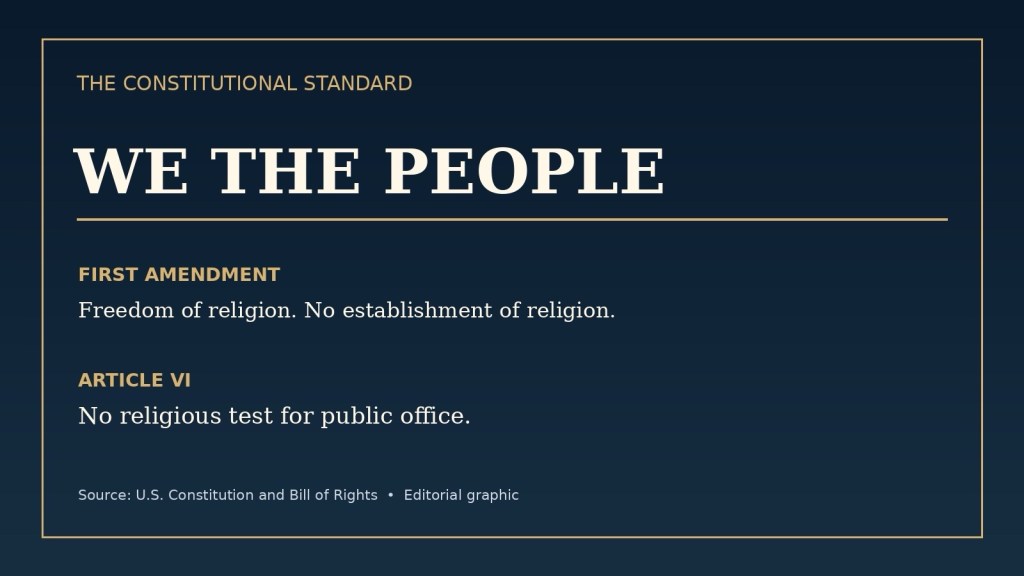
The First Amendment protects religious freedom and prohibits government establishment of religion. Article VI prohibits religious tests for public office.
Those protections matter.
Questioning religious teachings isn’t automatically hatred. Questioning a politician’s policies isn’t automatically discrimination.
At the same time, someone’s religion alone isn’t proof that they oppose our Constitution.
What matters is what public officials actually advocate, propose, and do.
And Americans should be free to ask those questions without abandoning their own religious convictions.
America, Who Is Protecting Our Founding Principles?
I believe America’s constitutional freedoms are worth protecting.
I believe the American people have a responsibility to understand what’s happening in their government.
And I believe that responsibility extends far beyond voting on Election Day.
We need to examine political movements, investigate proposed legislation, question public officials, and demand accountability.
Not just from one political party.
Not just from one religion.
From everyone entrusted with public office.
Because this isn’t simply about who gets elected.
It’s about what happens to America’s founding principles once those elected officials take their seats.
Can America remain geographically the same while becoming fundamentally different in the principles that govern it?
That’s the question I want Americans to consider.
And it’s a question we shouldn’t be afraid to ask.
Sources and documentation
- CAIR — 2026 Directory of Elected Muslim Officials — August 20, 2026.
- Anadolu Agency — Muslim Congressional Election Winners — November 4, 2026.
- MEMRI — Karim Abu Zaid and Uthman Ibn Farooq at the Texas Conference — May 23, 2026.
- Palestinian Media Watch — Ibrahim Mudayris Sermon — May 13, 2005.
- National Archives — Constitutional Amendment Process
- National Archives — The Bill of Rights
- National Archives — U.S. Constitution
Election information reflects preliminary reporting as of November 4, 2026. The author’s dream and its spiritual significance are presented as personal testimony.


Leave a Reply