By Joshua L Mullins
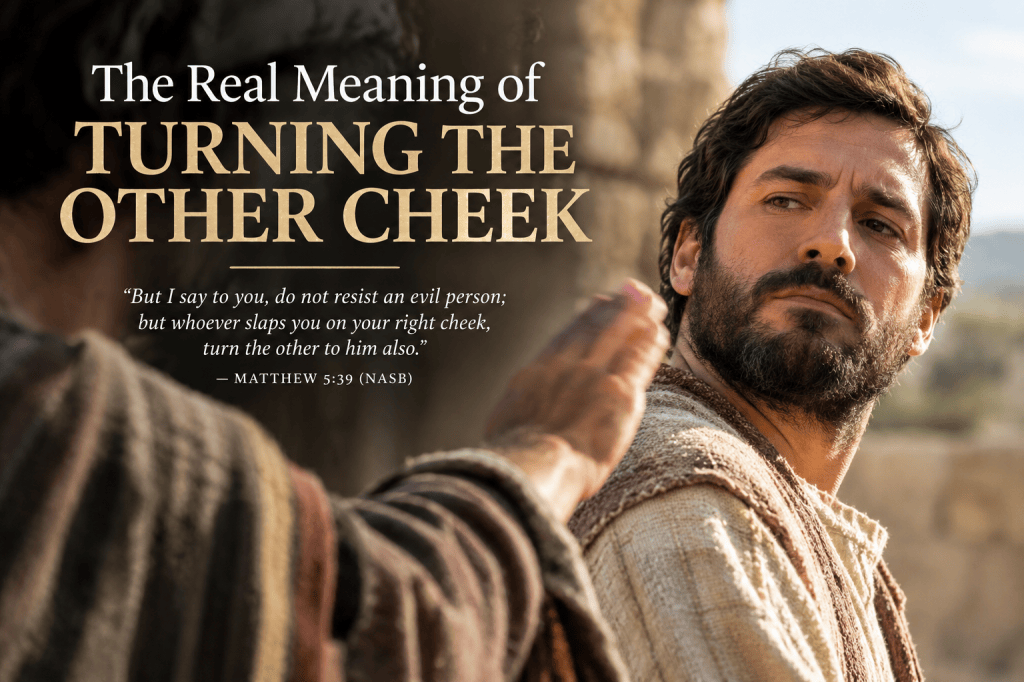
“But I say to you, do not resist an evil person; but whoever slaps you on your right cheek, turn the other to him also.”
—Matthew 5:39 (NASB)
Back in Jesus’ day, a slap on the cheek wasn’t usually about trying to hurt somebody real bad. It was about putting them in their place. When He said “your right cheek,” the people listening knew right away what that meant. Most folks are right-handed, so to hit someone on the right cheek you pretty much have to use the back of your hand. In that culture, a backhanded slap was a serious insult. It was how a master treated a slave, or how someone who thought they were better treated someone they looked down on. It wasn’t just a hit. It was a way of saying, “You’re nothing.”
The Jewish teachers of the time even treated a backhanded slap as worse than a regular open-handed slap. It carried more shame. So when Jesus told people to turn the other cheek, He wasn’t talking about every kind of violence or telling them to just take abuse and stay quiet. He was talking about this kind of personal insult—the kind that makes you want to hit back so you don’t look weak.
Turning the other cheek wasn’t being a pushover. When you turned your left cheek toward the person who just slapped you with the back of his hand, you made him decide what to do next. If he wanted to hit you again, he couldn’t do it the same way. He’d have to use his open hand, like he would with someone he saw as an equal, or he’d have to stop. It messed up the insult. You weren’t playing along with him trying to shame you. You weren’t striking back either. You were just refusing to accept the role he was trying to force on you.
This whole thing was part of something bigger Jesus was correcting. The old law about “an eye for an eye” was meant for the courts. It was there to keep people from going overboard with revenge. It was never supposed to be a personal excuse to get even when somebody wronged you. But by the time Jesus showed up, a lot of people were using it that way. He told them to stop. In your personal dealings, don’t answer insult with insult. Don’t let the need to protect your pride run the show.
We still run into this kind of thing. Somebody says something meant to cut you down, or treats you like you don’t matter, or tries to make you feel small in front of other people. The first thing that rises up in us is to defend ourselves or make sure they feel what we just felt. Jesus is calling for a different kind of strength—the kind that doesn’t let the other person’s contempt control how we respond.
That doesn’t come natural. We need the Holy Spirit’s help for this. On our own, we’ll protect our dignity by firing back somehow. When we yield to the Spirit, He gives us the power to take the insult without letting it own us. We’re not becoming doormats. We’re just not letting someone else’s attempt to shame us decide what we do or how we carry ourselves. We leave our reputation with God instead of trying to handle it ourselves.
Jesus walked this out. When people struck Him and mocked Him, He didn’t throw it back at them. He kept trusting the Father who judges rightly. The same Spirit who was with Him is with us. Next time somebody tries to put you down or treat you like you’re less than them, remember what Jesus said. You don’t have to take the role they’re trying to give you, and you don’t have to answer the same way they came at you. By the Spirit’s power, you can turn the other cheek—not like a victim, but like someone whose worth is settled in God, not in what other people think.


Leave a Reply