And there shall be signs in the sun, and in the moon, and in the stars… And when these things begin to come to pass, then look up, and lift up your heads; for your redemption draweth nigh.
— Luke 21:25, 28
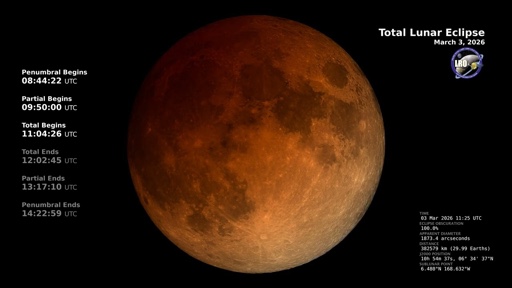
In the early hours of Tuesday, March 3, 2026, the moon over America turned the color of blood.
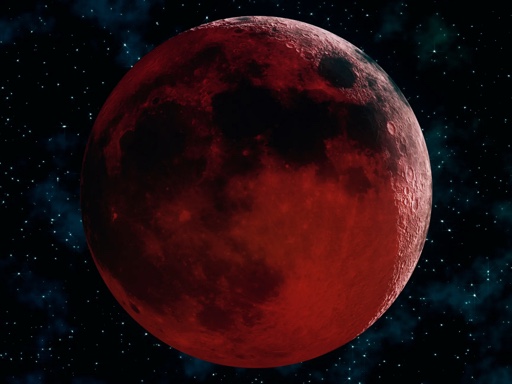
Maybe you saw it. Totality ran from 6:04 to 7:02 a.m. Eastern — which meant that in the eastern half of the country, people stood in their driveways in the cold before sunrise, watching a copper-red moon sink low toward the western horizon while the sky behind them began to lighten. On the West Coast it was 3:04 in the morning, and people set alarms for it. The only light reaching the lunar surface was sunlight bent through our own atmosphere — every sunrise and every sunset on the planet, projected onto the face of the moon at once. No telescope. No filter. Just a blood-red moon going down in the west like it had something to say.
And when it was over, astronomers noted something that should make any Bible reader sit up: it was the last total lunar eclipse anyone on Earth will see until the very end of 2028.
The sky went quiet after that. But 2026 was just getting started.
One Year, Four Eclipses, and a Strange Night in February
Stop and look at what the heavens have done in a single calendar year.
On Tuesday, February 17, 2026, an annular solar eclipse — the “ring of fire” — turned the sun into a burning circle over the southern hemisphere. Eleven days later, on the evening of Saturday, February 28, a rare planetary parade stretched across the night sky, six worlds lined up like a string of lamps. That same night, the first American and Israeli jets were lifting off toward Iran, beginning a war that would reshape the Middle East. Planets in a line overhead; nations in a line for battle below. You can call it coincidence. You can at least admit it was a strange night to be standing outside.
Then came the pre-dawn blood moon of March 3. Then, on the evenings of June 8 and 9, Venus and Jupiter — the two brightest objects in the night sky — slid into a close conjunction, merging into what looked like a single blazing star. Then, on Wednesday, August 12, a total solar eclipse carved its path across Greenland, Iceland, and Spain — reaching totality over Iceland’s western fjords at 5:45 p.m. local time and swallowing the sun over Spain in the evening, low toward the horizon — the best solar eclipse Britain has seen since 1999. And fifteen days later, on the night of Thursday, August 27, the moon took one more bite of shadow: a partial eclipse so deep that at its peak — just after midnight Eastern, 12:13 a.m. on the 28th — 96 percent of the moon’s face was buried in the darkest part of Earth’s shadow.
Four eclipses in one year. A planetary parade. A double conjunction. And behind all of it, the sun itself at the peak of its cycle — as July began, heading into the July 4 weekend, it hurled ten solar flares in a single day, and by late August its storms were driving the northern lights so far south that people in New York and Idaho stood in their yards photographing a sky on fire.
The ancient world would have been terrified. Historians tell us eclipses shook kings and emptied streets — Josephus even records a lunar eclipse hanging over Jerusalem in the final, paranoid days of Herod the Great, and nobody in that city slept well afterward. People in the ancient world read the sky with fear because they believed the sky spoke.
Here is the question we have to ask: Were they entirely wrong?
The Word Jesus Used for “Signs”
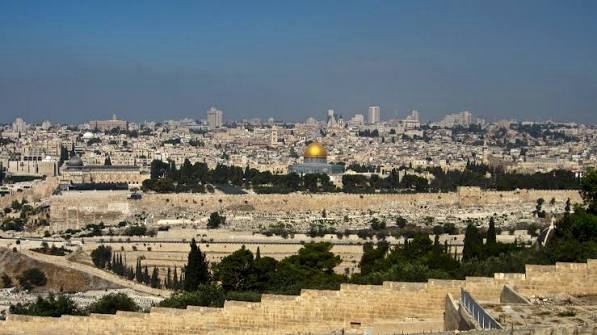
The idea of watching the sky for signals did not come from conspiracy channels or prophecy conferences. It came from Jesus. Standing on the Mount of Olives, describing the days before His return, He said there would be “signs in the sun, and in the moon, and in the stars” (Luke 21:25).
The Greek word translated “signs” is sēmeion, and you need to see what this word really means. Its root is sēma — a mark, a token, something fixed in place so it can be recognized. In the ancient world a sēma could be a signal flag on a hill, a boundary marker on a road, or an inscription on a monument. The word always carried one idea: something planted in plain view that points you to something beyond itself.
That means a sēmeion is never the destination. It is the billboard that tells you the destination is near.
Think about how a billboard works. You don’t pull your car onto the shoulder and stare at the sign that says the city is ten miles ahead. You read it, you adjust, and you keep driving — awake, alert, expectant — because the sign just told you something true about where you are on the road. The sign’s whole job is to change how you drive.
Now hold that picture, because this is where it gets remarkable. When the Old Testament was translated into Greek, the translators used this same word — sēmeia — in Genesis 1:14, where God set the lights in the heavens “for signs.” And the Hebrew word underneath it is ot — a signal, a token, a mark of something God intends to do. Do you see what that means? The very first chapter of the Bible says the sun, moon, and stars were manufactured to be signal flags. Jesus, standing on the Mount of Olives at the end of the story, reaches all the way back to the fourth day of creation and uses the identical word. From Genesis to the Gospels, the lights in the sky have one job description: to signal.
So when Jesus said there would be sēmeia in the sun and moon and stars, He wasn’t telling us to become astrologers. He was telling us that in the days before His return, the created lights themselves would start waving flags — and that wise people would read them as what they are: markers on the road, telling the traveler that the destination is close.
God’s Appointment Calendar
And there’s a second layer in Genesis 1:14, sitting right beside the first. God set the lights there “for signs, and for seasons.” In English that sounds like spring, summer, and fall. But the Hebrew word is moedim — and it doesn’t mean weather. It means appointed times.
This is the exact word the Bible uses for the feast days of Israel. Leviticus 23:2 says, “Concerning the feasts of the LORD… these are my feasts” — and the word underneath “feasts” is moedim: fixed appointments, scheduled meetings between God and His people. Psalm 104:19 says it outright: “He appointed the moon for seasons” — moedim again. The moon was appointed to run the appointment calendar.
And the calendar runs on the sky. Passover falls on the fourteenth of the Hebrew month Nisan — a full moon, by design. The Feast of Trumpets arrives at the new moon. The Creator built His schedule into the heavens before He ever formed a human being to look up and read it.
So when that same sky starts staging blood moons and black suns in clusters, the Hebrew reader doesn’t need a prophecy teacher to feel the weight of it. He already knows what the lights are for. They are for signals. They are for appointed times. And they were hung up there by Someone who has never missed an appointment in six thousand years.
What the Sky Is Not Saying
Now — the honesty that keeps all of this biblical.
Not every eclipse is a prophecy bulletin. Eclipses run on clockwork; astronomers can plot them a thousand years forward and backward, and the God who wound that clock is not surprised by a single tick of it. Jesus rebuked people who demanded signs as entertainment (Matthew 16:1–4), and He said flatly that no man knows the day or the hour of His return (Matthew 24:36). Any person who circles a date on a calendar because of a blood moon has stopped reading his Bible and started reading himself.
So what do we do with a year like 2026? The answer is one word: accumulation.
Jesus never pointed to a single sign — He stacked them. Signs in the heavens. Distress of nations. The sea roaring. Deception multiplying. Lawlessness abounding. Israel back on center stage. Each one alone is a headline; together they are a convergence, and convergence is precisely what He told us to watch for. He called them birth pangs — and birth pangs don’t announce the baby with one contraction. They announce it by coming closer together, and harder, at the same time.
The error was never watching. The error is date-setting. God commands the first and forbids the second.
The Pattern: Joel, Pentecost, and the Sixth Seal
If the sky this year is a whisper, the prophet Joel describes the shout. “The sun shall be turned into darkness, and the moon into blood, before the great and the terrible day of the LORD come” (Joel 2:31).
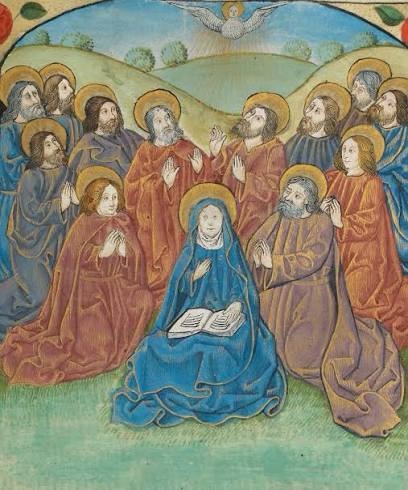
Now watch how the Bible carries that image — because the design is stunning. The shadow appears in Joel, eight centuries before Christ. The sermon appears in Acts, when Peter stands up on the day of Pentecost and quotes Joel’s very words to a stunned Jerusalem crowd (Acts 2:17–21). And the substance appears in Revelation, where John watches the sixth seal opened: “the sun became black as sackcloth of hair, and the moon became as blood” (Revelation 6:12).
Joel. Acts. Revelation. The same image, carried across fifteen centuries, moving closer each time it surfaces — like a wave that keeps returning, bigger with every pass, until the day it finally breaks on shore. The blood moons of our decade are not the sixth seal. But they rhyme with it — and Scripture trains its readers to pay attention to the rhyme, because the final verse is already written.
So Look Up
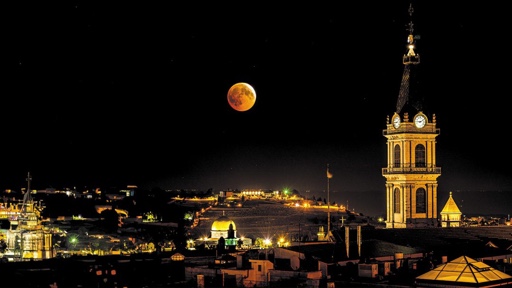
I don’t know what went through your mind if you saw that red moon going down in the west back in March. Maybe you took a picture and forgot about it. Maybe something stirred in you that you couldn’t explain. But I know what Jesus wants the sky to produce in you, because He said it in the very same breath where He gave the signs: “And when these things begin to come to pass, then look up, and lift up your heads; for your redemption draweth nigh” (Luke 21:28).
Look up — not in dread, but in expectation. Lift up your head — not weighed down by the news, but raised by the promise. The signals in the sky were never given to make God’s people afraid. They were given to make God’s people ready — and to make a watching world curious enough to ask why we aren’t panicking.
That’s the whole point of a sēmeion. It points past itself. The blood moon points to the returning King. The blackened sun points to the day of the Lord. The planetary parade points to the One who set every one of those lights in its course — and who knows the exact hour He has appointed.
Heaven has been speaking all year. The wise response isn’t fear, and it isn’t a calendar. It’s opening the book that tells us what the sky is saying — the book that ends with the loudest announcement heaven has ever made. And that book opens with a promise no other book of the Bible makes: a blessing, spoken in advance, over every person who simply reads it (Revelation 1:3). The unveiling of Jesus Christ begins in Revelation chapter 1 — and you’re invited to walk through it with us.
MY PRAYER FOR TODAY
Lord, You hung the lights in the sky and wrote their job description before You ever made me. Forgive me for the times I’ve walked under Your signals without looking up. Teach me to read the sky the way Jesus taught — with expectation, not fear; with watchfulness, not date-setting. Make me ready for the appointments You have scheduled, and let my life point past itself the way Your signs do — straight to You. In Jesus’ name, amen.
MY CONFESSION FOR TODAY
I am not a date-setter; I am a watcher. I am not fearful; I am ready. The God who appointed the moon keeps every appointment He has ever made — and that includes the return of His Son. When the sky speaks, I look up. My redemption is drawing near, and I will lift up my head. I declare this by faith, in Jesus’ name!
QUESTIONS FOR YOU TO CONSIDER
- When you saw the headlines about this year’s eclipses and blood moon, what was your honest first reaction — curiosity, fear, or indifference? What does that reaction tell you?
- Jesus said the signs would come like birth pangs — closer together and harder at the same time. Where in your life have you been watching the contractions instead of preparing for the arrival?
- If the sky is a billboard pointing past itself, what — or who — is your life pointing to right now?
- Have you ever read the book of Revelation all the way through? If the Author of the sky promised a blessing over the reading of it, what is keeping you from starting?


Leave a comment