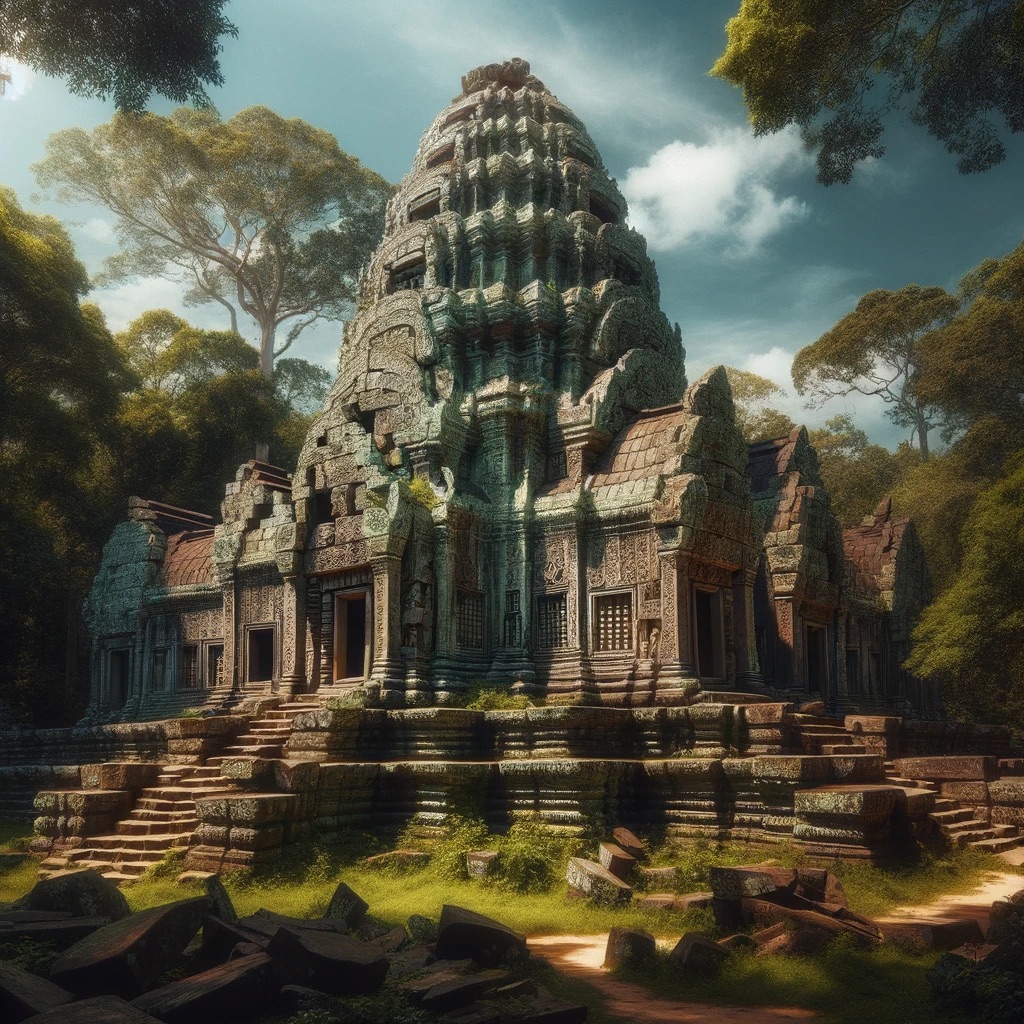
To get ready for end-time events, it’s important to know what to focus on and how to prepare. Imagine standing in front of a huge, beautiful building like a grand cathedral or an old temple. It looks so strong and amazing that you might think it could last forever. But even these impressive buildings won’t last forever. Jesus pointed this out when He and His disciples were leaving the temple in Jerusalem. Though this temple was a big deal for worship and really impressive, He used it to show that nothing on Earth lasts forever.
The temple was truly a sight to behold, lavishly decorated and constructed to showcase human skill and devotion to God. Yet, when the disciples pointed out the magnificence of the temple, Jesus gave them a startling reply that shifted their perspective entirely. He said, as recorded in Matthew 24:2 NKJV, “Do you not see all these things? Assuredly, I say to you, not one stone shall be left here upon another, that shall not be thrown down.” This was a prophecy indicating that the magnificent temple would be completely destroyed, which indeed happened about forty years later when the Romans dismantled Jerusalem.
This statement from Jesus wasn’t just about predicting the temple’s destruction; it was also teaching a deeper lesson about what truly matters. The temple, with all its earthly grandeur, was temporary. Jesus was shifting the focus from physical structures to something far more enduring—the spiritual life within each person. This idea was revolutionary because it meant that worship wasn’t about a specific location or building. Instead, it was about how people lived and connected with God on a personal level.
Jesus expanded on this idea by emphasizing that God’s true dwelling place isn’t made with human hands, nor is it confined to any temple or building. As He said in John 4:23-24 NKJV, “But the hour is coming, and now is, when the true worshipers will worship the Father in spirit and truth; for the Father is seeking such to worship Him. God is Spirit, and those who worship Him must worship in spirit and truth.” This means that true worship happens within us—within our hearts and our spirits—wherever we are.
In shifting the focus from a physical temple to the hearts of believers, Jesus introduced a new way of understanding how we connect with God. This was further supported by His teachings and the writings of His followers. The Apostle Paul, for instance, spoke directly to this new concept of personal and internal worship. In 1 Corinthians 3:16 NKJV, Paul asks, “Do you not know that you are the temple of God and that the Spirit of God dwells in you?” This verse underlines the idea that each believer is like a small temple themselves, carrying a part of God’s spirit within them.
This idea is a powerful reminder that what we often see as permanent and stable in our world, like big buildings and famous landmarks, are not as lasting as the spiritual truths and the relationships we build with God and with each other. Everything physical in this world, no matter how grand it may seem, has a lifespan. But spiritual connections, love, kindness, and the truths of God—these are things that don’t crumble or fade away.
Therefore, when Jesus spoke those words about the temple not having one stone left upon another, He wasn’t just predicting the future; He was teaching us a way to understand where true value lies. It’s not in the physical and the material, but in the spiritual and eternal. He invited us to look beyond what is temporary and invest ourselves in what is everlasting—our relationship with God and how we live out His teachings in our lives every day. This lesson is as relevant today as it was back then, reminding us to focus on nurturing our inner selves and our spiritual lives more than anything else.
—Josh Mullins—


 Faith Works
Leave a reply to breakinginsanity76 Cancel reply