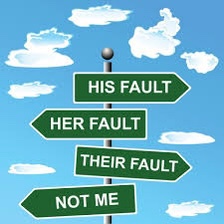
In a world filled with complex challenges and multifaceted problems, it’s become increasingly common for people to point fingers and assign blame when things go awry. Whether it’s a personal failure, a societal issue, or a global crisis, the instinct to lay blame elsewhere is a pervasive one. But is it fair or productive to always assume that “it’s everyone else’s fault”?
The Blame Game:
One of the most prevalent behaviors in human interactions is the act of blaming others for our problems. It’s a defense mechanism that allows us to distance ourselves from responsibility, protect our self-esteem, and preserve our self-image as competent and virtuous individuals. Instead of taking ownership of our actions and their consequences, we often find comfort in attributing our misfortunes to external factors.
The Individual Perspective:
From an individual perspective, blaming others can be a way to cope with personal failures. For instance, someone who didn’t get a job they wanted may blame the hiring manager, the competition, or the interview questions rather than reflecting on their own qualifications or interview performance. This can provide temporary relief from the sting of rejection but doesn’t lead to personal growth or improvement.
The Societal Perspective:
On a larger scale, the blame game can also extend to societal issues. When a nation faces economic difficulties, politicians may point fingers at their predecessors, neighboring countries, or global market forces. While external factors can indeed influence a nation’s economy, ignoring internal factors and failing to take proactive measures can hinder progress.
The Consequences of Blame:
Blaming others, whether on an individual or societal level, often perpetuates a cycle of inaction and stagnation. It can erode trust and collaboration, making it difficult to address real problems constructively. Furthermore, this habit of externalizing responsibility prevents us from learning from our mistakes and finding innovative solutions.
Taking Responsibility:
Rather than resorting to the blame game, a more productive approach is to take responsibility for our actions and choices. This doesn’t mean ignoring external factors or neglecting to hold others accountable when they contribute to a problem. Instead, it means acknowledging our own agency in shaping outcomes and actively seeking ways to improve ourselves and the world around us.
Moving Forward:
It’s essential to recognize that life is often a complex interplay of internal and external factors. While external circumstances can certainly impact our lives, how we respond to those circumstances is within our control. Embracing responsibility and taking proactive steps to address challenges can lead to personal growth and societal progress.
In conclusion, the inclination to blame others when things go wrong is a common human response, but it’s not always the most constructive one. Instead of falling into the trap of the blame game, we can choose to take ownership of our actions and work towards solutions. By doing so, we empower ourselves and our society to move forward, learn from our mistakes, and create a better future.
Josh Mullins


Leave a comment