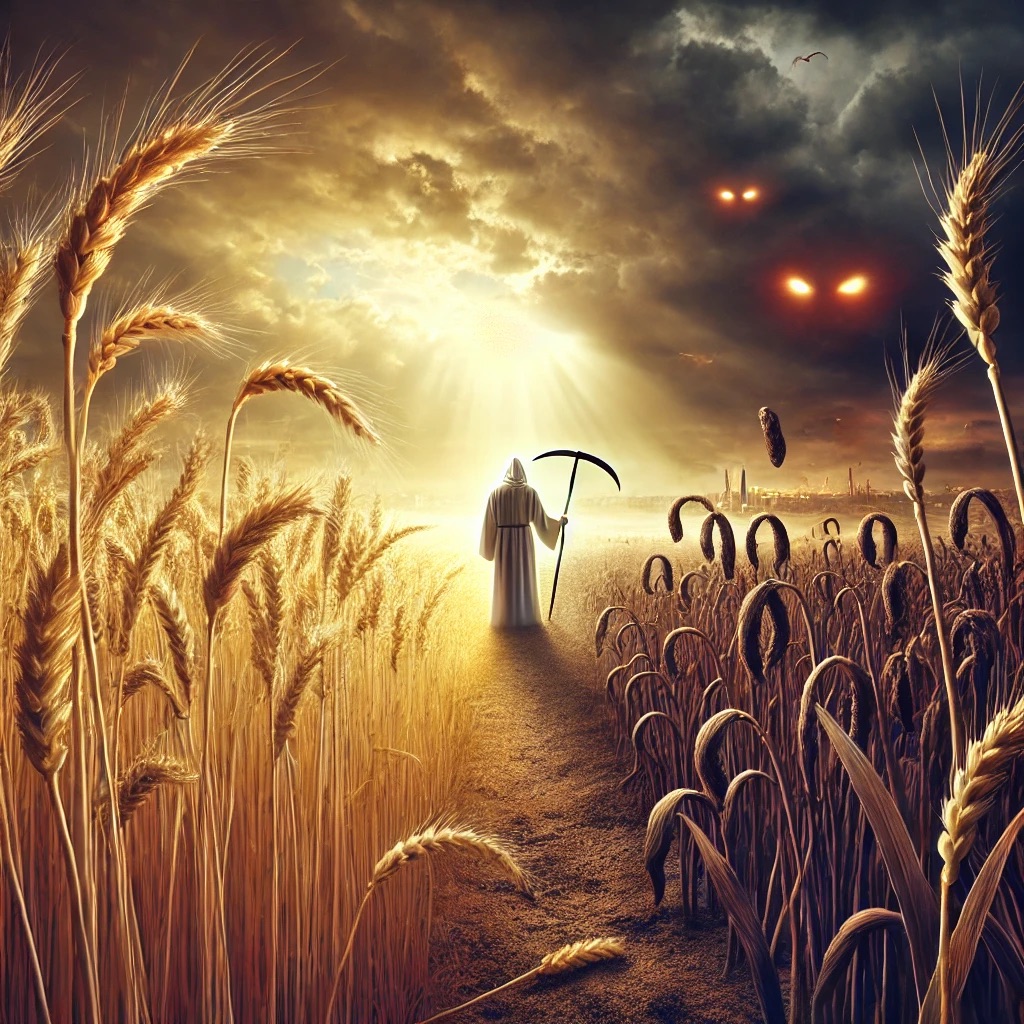
Here’s a question that could stop you in your tracks: What if the person sitting next to you in church isn’t who you think they are? Could they be a spiritual “weed,” growing alongside you, yet destined for a very different fate? It sounds harsh, right? But that’s exactly what Jesus was getting at in one of His most challenging parables—the Parable of the Wheat and the Tares.
This parable, found in Matthew 13, has sparked conversation and debate for centuries. Jesus uses the image of wheat and tares (weeds) to describe how good and evil coexist in the world, sometimes indistinguishable from each other until the final harvest—the judgment day. It’s a story that shakes us out of complacency and forces us to ask tough questions: Who are we to judge? And why does God allow the good and the bad to grow together?
Let’s break this down, shall we? This isn’t just a lesson on ancient farming techniques. It’s a call for patience, humility, and trust in God’s ultimate justice. It’s a parable for anyone who’s ever wondered why evil is allowed to persist and what role we play in discerning right from wrong.
The Parable Explained: A Shocking Message for Jesus’ Audience
Imagine hearing this for the first time as one of Jesus’ disciples. You’re living under the oppressive rule of the Roman Empire, eagerly awaiting the Messiah to bring justice and wipe out the wicked. Then, Jesus starts telling this story about a farmer sowing wheat, only to have an enemy come in the night and plant tares—poisonous weeds that look like wheat until the final stage of growth.
The disciples probably thought, “Well, surely the farmer will rip those weeds out!” But Jesus flips their expectations upside down. Instead of removing the tares, the farmer says to leave them be until the harvest. Why? Because in the rush to remove the tares, you might accidentally uproot the wheat. The message was clear: Judgment isn’t ours to make—not yet, anyway.
Why Did Jesus Teach This Parable?
At this point, we have to ask: Why did Jesus give this particular parable to His disciples? What was happening during that time, and why use such a vivid metaphor about farming?
Jesus wasn’t speaking into a vacuum. In His day, the Jewish people were under Roman rule, longing for a political revolution, waiting for the day when the Messiah would deliver them. The religious leaders, too, were obsessed with separating the “righteous” from the “sinners.” In fact, many of them viewed themselves as the pure “wheat,” while anyone who didn’t meet their standards (tax collectors, sinners, gentiles) were seen as tares to be removed.
But Jesus wasn’t bringing the kingdom of God in the way they expected. He was speaking about a spiritual kingdom, one that wouldn’t immediately eradicate evil but would allow it to coexist with the good until the time of harvest—the final judgment. This was shocking, almost scandalous. Why wouldn’t God deal with the wicked now? Why let the tares stay?
The Wheat and the Tares: A Lesson in Patience and Trust
Here’s where the parable becomes deeply relevant to us today. We all want to see justice, right? When we encounter evil, injustice, or hypocrisy, our first instinct is to remove it, to call it out. We want to “fix” the world, sometimes thinking we can do it all ourselves. But in this parable, Jesus challenges that impulse. Not yet, He says. Why? Because in our zeal to root out the wicked, we might harm the righteous.
Jesus explains that both the wheat (the children of the kingdom) and the tares (the children of the evil one) will grow together until the harvest, or the end of the world. The enemy, Satan, has sown these tares to deceive, to confuse, and to corrupt. But the separation—the judgment—is reserved for God alone, not for us.
Let that sink in. We are not the harvesters. The role of separating the wheat from the tares belongs to God, and He will do it when the time is right.
The Greek and Hebrew Meanings: Digging Deeper
Let’s dig into some of the original language here because the Greek words give us even more insight. The word used for wheat in Greek is “sitos”, which simply means grain but carries a rich symbolic meaning throughout scripture, often representing spiritual nourishment and righteousness.
Now, the tares? The Greek word for tares is “zizania”, which refers to a specific type of weed called darnel. This isn’t just any weed. Darnel looks almost identical to wheat in its early stages. It’s not until both plants mature that you can tell the difference. And here’s the kicker—darnel is poisonous. Eating it can make you sick. So, not only do these weeds look deceptively like wheat, but they’re also dangerous.
This teaches us something critical: evil can look deceptively similar to good. In fact, it often masquerades as good. It’s not always obvious who the true “wheat” are and who the “tares” are. That’s why Jesus calls us to be patient. Judgment is more complicated than it seems.
Cross-Referencing Scripture: Old and New Testament Echoes
The idea of separating the righteous from the wicked is found throughout Scripture. Take a look at Malachi 4:1 (KJV):
“For, behold, the day cometh, that shall burn as an oven; and all the proud, yea, and all that do wickedly, shall be stubble: and the day that cometh shall burn them up, saith the Lord of hosts, that it shall leave them neither root nor branch.”
Here, we see a similar image of final judgment where the wicked are burned like stubble, just as the tares are burned after the harvest. The Old Testament prophets consistently pointed toward a day when God would separate the righteous from the wicked, but they also highlighted God’s patience and mercy in delaying that judgment.
And then there’s Revelation 14:14-19 (KJV), which uses harvest imagery to describe the end times, where the Son of Man comes with a sickle to reap the earth. The wheat is gathered for God’s kingdom, and the wicked are cut down and thrown into the winepress of God’s wrath. This is the final separation that the parable points to.
The Application Today: Who Are We to Judge?
Now, let’s bring this closer to home. How do we apply this parable to our lives? Should we never judge? Should we just allow sin and corruption to thrive unchecked? Absolutely not. But here’s the nuance: while we are called to discernment, we’re not called to execute final judgment.
The church is a field full of both wheat and tares. People who appear righteous may, in fact, be spiritually poisonous. At the same time, some who seem weak in their faith might be authentic believers growing slowly but steadily. This parable calls us to exercise humility. We can’t always tell the difference, so it’s dangerous to assume we know who is wheat and who is a tare. If we rush to judgment, we might do more harm than good.
Think of new believers or those struggling in their faith. In our desire to purify the church or society, we could end up harming those who are still growing, unintentionally pulling them up as if they were tares. The warning here is clear: Leave it to God. He will sort it out at the harvest.
God’s Judgment: Patience with a Purpose
The beauty of this parable is that it reminds us of God’s infinite patience. While we may be eager for God to come down and wipe out the wicked, He’s holding back for a reason. 2 Peter 3:9 (KJV) tells us:
“The Lord is not slack concerning his promise, as some men count slackness; but is longsuffering to us-ward, not willing that any should perish, but that all should come to repentance.”
God delays His judgment not because He’s indifferent, but because He’s merciful. He’s giving people time to repent, even those we might consider “tares.” The delay is not weakness—it’s grace.
Conclusion: Wheat and Tares—Where Do We Stand?
Here’s where the parable becomes truly personal: Which are you? Are you wheat, growing in righteousness, or are you a tare, blending in but resisting God’s transformative work?
The parable of the wheat and the tares is an invitation to self-examination. It’s a call to humility, patience, and trust in God’s ultimate justice. We are reminded that while the world may seem to let evil run unchecked, there will come a time when God will separate the wheat from the tares—perfectly and decisively. Until then, our job is to grow, to stay rooted in Christ, and to trust in the harvest to come.
And remember—God, the Master Farmer, knows exactly what He’s doing.
—Joshua L Mullins

 Faith Works
Leave a comment