“Judgment builds walls, but grace builds bridges.” —Joshua L Mullins
It’s really sad when you think about it. You make a mistake, slip up, or even dive in headfirst into sin, and suddenly, there’s a whole bunch of Christians ready to throw stones at you. It’s like there’s a hidden pile of rocks in every church, just waiting for someone to mess up. One wrong move, and here comes the storm.
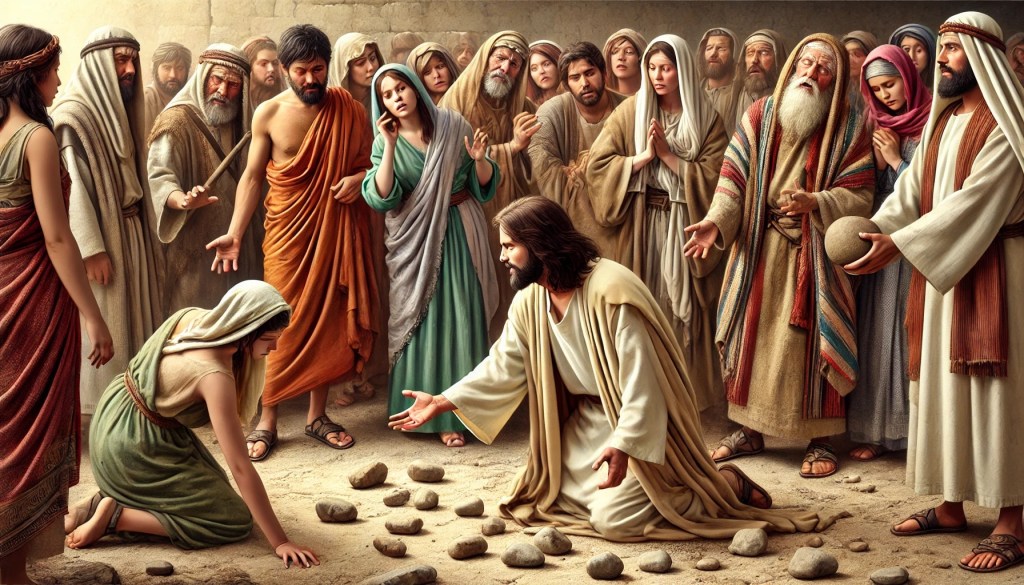
Remember that story in the Bible where the Pharisees brought a woman caught in adultery to Jesus? They were all set to stone her to death, demanding Jesus to back them up because the law of Moses said she should be punished. But Jesus didn’t jump on their bandwagon. Instead, He bent down and wrote something in the dirt. Some say Jesus wrote each of their names in the dirt, followed by their sins—just a theory, but an intriguing one. When they pushed Him for an answer, He said, “He who is without sin among you, let him throw a stone at her first” (John 8:7, NKJV).
And just like that, the stones started dropping. One by one, the accusers left, starting from the oldest to the youngest, realizing they weren’t perfect either. The woman was left standing there, probably expecting the worst but receiving mercy instead.
That’s a powerful lesson, yet we often forget it. How quickly do we forget our own mistakes when we see someone else’s? There’s a strange satisfaction in pointing out other people’s sins, maybe because it distracts us from our own. We end up using God’s Word as a sword against one another instead of a shield. Instead of protecting and supporting each other with scripture, we wield it to cut each other down.
We say we support one another and do not judge, but we seem to fall into the trap of quickly judging others without even knowing the circumstances. It’s easy to see someone’s actions and immediately think the worst, forgetting that there’s always more to the story. This rush to judgment only drives a wedge between us and makes it harder to live out the love and grace we’re called to show.
As Christians, we’re supposed to reflect Christ’s love and forgiveness. We’re meant to lift each other up, not tear each other down. But too often, we act like those Pharisees, ready to judge instead of showing grace. It’s easy to focus on someone else’s faults, as if their mistakes make us look better by comparison. But this mindset is dangerous; it leads us away from compassion and towards harsh judgment.
Think about this: what if we took the energy we use to judge and instead used it to support each other? Instead of using stones to condemn, we could use them to build bridges and foundations of understanding. Each stone we might have thrown could be a step toward reconciliation and healing.
We’re all imperfect. We all sin. Romans 3:23 tells us that “all have sinned and fall short of the glory of God.” No one is exempt. But God’s grace covers us all. This isn’t an excuse to keep sinning but a call to show that same grace to others. When we fall, we don’t need condemnation; we need encouragement to get back up and keep moving forward with God.
Imagine a church where, instead of fearing judgment, people felt safe to admit their struggles and receive support. A place where love and grace are the first responses to failure. How amazing would that be? It would reflect the heart of Jesus, who sees our sins but also our potential for redemption.
So next time you feel like throwing a stone, take a moment to think. Remember what Jesus said. Consider your own mistakes and the grace you’ve received. Extend that grace to others. Let’s be people who build each other up with love and forgiveness.
Our walk with Christ isn’t meant to be lonely. We’re called to walk together, to help each other, and gently restore one another when we mess up (Galatians 6:1-2). This is what true community is about—lifting each other up, not tearing each other down.
Let’s decide to be stone-layers, not stone-throwers. Let’s encourage one another with the same love and forgiveness that Jesus has shown us. When we see someone stumble, let’s offer a hand up, not a hand full of stones. In doing so, we’ll reflect the heart of Jesus and create a community where grace and love are abundant.
In the end, it’s not about who can throw the first stone, but who can offer the first embrace. That’s where true healing begins. That’s where we find the strength to continue our journey of faith, together.
—Joshua L Mullins

 Faith Works
Leave a comment