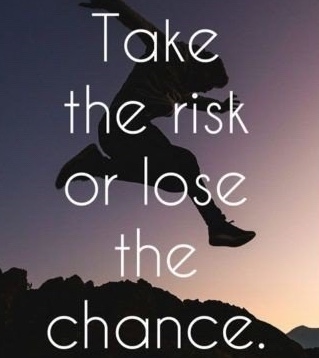
In the realm of personal and professional growth, there’s a profound truth that often goes overlooked: it’s riskier to never take a risk. While the allure of staying in our comfort zones can be tempting, it’s essential to recognize that a life devoid of risk-taking is a life destined for stagnation and missed opportunities. In this article, we’ll explore why taking risks is not only essential for growth but also a safer bet than playing it safe.
Embracing Change and Adaptation
One of the key reasons why taking risks is less risky than avoiding them altogether is the concept of adaptability. The world is in a constant state of flux, and those who remain static are often left behind. Risk-taking forces us out of our comfort zones and into unfamiliar territories, where we must learn, adapt, and evolve to thrive.
Consider the story of successful entrepreneurs who risked their savings, time, and energy to start their businesses. They embraced the uncertainty of the market, learned from their failures, and adapted their strategies. While not every venture succeeds, their willingness to take risks ultimately positions them for greater success in the long run.
Learning and Personal Growth
In the pursuit of personal development, taking calculated risks is a critical component. Think about your comfort zone as a safe harbor, but safe harbors rarely produce adventurous sailors. When we venture into the unknown, we encounter new challenges and obstacles that push us to grow, learn, and discover our true potential.
Imagine someone who has always dreamt of traveling the world but hesitates due to the risks involved. By stepping outside their comfort zone, they expose themselves to diverse cultures, languages, and experiences. Through these experiences, they not only learn about the world but also gain invaluable insights about themselves, fostering personal growth and self-discovery.
Opportunity and Reward
Risk and reward are inseparable companions. While risk involves uncertainty and the potential for failure, it also holds the promise of great rewards. It’s like playing a game with a higher payout for those willing to take on more challenging levels.
Consider the realm of investing. A risk-averse individual might keep their money in a low-yield savings account to avoid potential losses in the stock market. However, by doing so, they miss out on the opportunity for their wealth to grow significantly over time. In contrast, those who are willing to invest in stocks, despite the inherent risk, have the potential to reap substantial rewards over the long term.
Regret Avoidance
Regret is a powerful motivator, and one of the most profound regrets people often have is not taking more risks when they had the chance. It’s the “what ifs” that haunt us. What if we had pursued that dream job, started that business, or told someone how we truly felt? Regret stems from missed opportunities, and it can be far more painful than the setbacks that come from taking risks.
By acknowledging the potential for regret in a risk-averse approach to life, we can see that embracing risk becomes the safer choice. After all, when we take calculated risks, we can look back with pride, knowing we gave it our all, even if the outcome wasn’t what we expected.
Conclusion
In the grand tapestry of life, it’s clear that it’s riskier to never take a risk. Risk-taking is not a reckless endeavor but a calculated and strategic approach to personal and professional development. It leads to adaptability, personal growth, and the potential for rewarding experiences that enrich our lives. So, the next time you’re faced with a choice between the safe path and the path less traveled, remember that the greatest risk may be in avoiding risk altogether. Embrace the unknown, for therein lies the true adventure of life.
Josh Mullins
 Faith Works
Leave a comment